It's about the kids.
It always has been.
Empower. Engage. Educate.
Three years on the board. A referendum that finally passed, delivered under budget and ahead of schedule. A superintendent who is moving this district forward. Let's keep going.
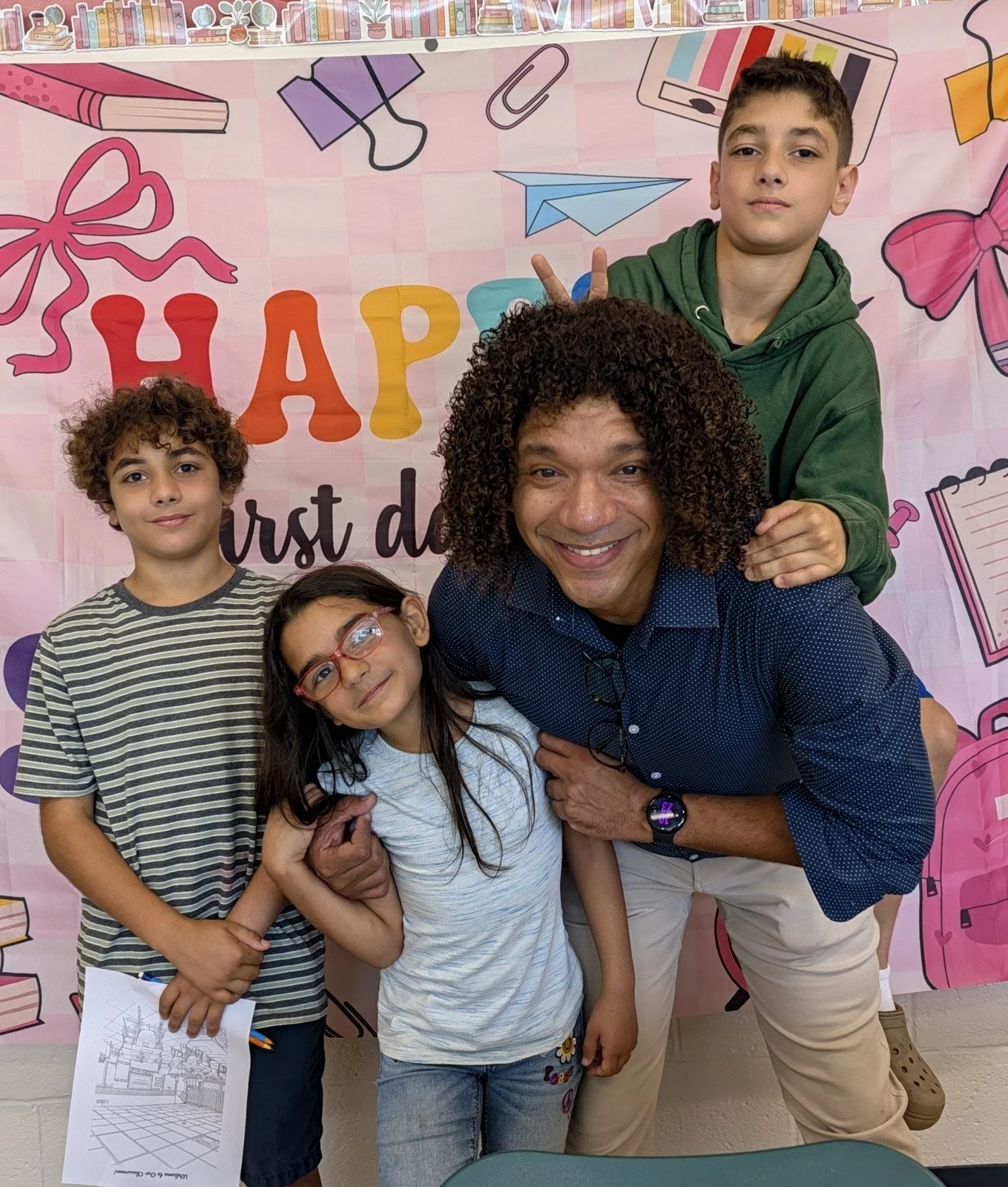
Passed on the first try
The first Southampton referendum ever to pass on its first attempt — built from community input.
Under budget, ahead of schedule
All major projects finished this fall. What wasn't spent goes to debt service, which lowers the debt line on your tax bill.
Eight budgets at or under the 2% cap
Every upgrade, program and curriculum addition came in under the state levy cap — no closed schools, no cut programs, no staffing reductions.
What three years on the board actually delivered
My #1 job is the best education for our students. Fiscal responsibility matters because only a sustainable district produces good outcomes — and the most effective solution isn't always the most expensive one.
A referendum that set us up for the next 20–30 years
New field and track, repaving, new boilers, replaced floors, the old bus garage rebuilt as the Russell R. Hann Humanities Annex, and the infrastructure nobody sees but everyone needs. All major projects finished this fall, under budget and ahead of schedule.
A groundbreaking contract with our teachers and staff
We were losing good people. We negotiated a contract with our local association that delivers fair wages and builds in open lines of communication and accountability between staff, administration and the board — so problems get solved instead of festering.
Real-time data on reading and math, not a year-late state test
Literacy screeners three times a year (more than the state requires), plus IXL and Fountas & Pinnell benchmarking in ELA and math, so teachers can act on where each student is now instead of waiting on delayed NJSLA results. This spring we beat the state average in 12 of 15 grade-level results.
Hired a superintendent who is moving the district forward
After a period of turnover, I was part of the team that hired Superintendent Megan Geibel. Some doubted the choice. The results speak for themselves.
Live-streamed meetings and early, comprehensive tech and AI policies
Before I was on the board, parents could watch board meetings because the PTA streamed them, with equipment I set up. The district streams them itself now, and the recordings stay up. I led early technology policy work, including getting ahead on AI in the classroom — other districts have come to Southampton to see how we did it.
A voice for kids in Trenton — including the ones the system forgets
Pushed school funding and local control to the county and state level, because Southampton's problems don't get solved by waiting for Trenton to notice us. And as a foster and adoptive dad, I advocate for the students who need someone in their corner most: kids in foster care, kids in transition, kids without a stable adult at the meeting. Every child in our district deserves the same shot.
What I actually said, with the tape
A three-page "issues list" is going around describing what the candidates believe. Its author says she didn't ask us. So here is what I said, with the recordings, because you deserve the record and not someone's recollection of it.
Two things first. Mike Dehoff, Faith Lynch and I endorse each other, but we filed separately, we pay for our own campaigns, and we don't agree on everything. A table that puts three people in one column turns something one of us said into something all three of us "believe." I can only answer for myself, and that's what this is.
Second, every quote below links to the moment it was said. The Sept. 21 forum and the Oct. 22 League of Women Voters forum are on YouTube. The Oct. 21 LeisureTowne forum was intro speeches only and wasn't filmed; I have detailed notes from that night.
Money
Southampton spends $25,000 per student, versus $7,000–$20,000 at private and parochial schools.
The state's figure for Southampton is $20,621 per pupil for 2026-27, below the state average of $21,199. "Twenty-five thousand" was said on stage on Sept. 21 and withdrawn on the spot when I corrected it.
Tuition is a price, not a cost. St. Mary of the Lakes charges $6,779; the parish covers part of what the seat costs; the state pays roughly $1,600 per nonpublic pupil in security, nursing, technology and textbook aid; and this district pays $1,177 a year to about 30 families for private-school transportation. A private school can also decline a child with an IEP. We can't, and one specialized placement costs $66,000 to $100,000 a year. That is the gap between $7,000 and $20,000, and it's the law.
Tighter controls should be implemented to stabilize or reduce costs.
Controls are a record, not a slogan: eight budgets in a row at or under the 2% cap, the tightest multi-year levy growth of the eight towns that feed Lenape, through back-to-back double-digit health-premium increases (with another 34% approved for January), with no layoffs, no closed schools and no cut programs — while neighboring districts closed schools, cut programs or laid off staff. Pre-K at 100% state funding. The board commissioned an independent analysis of the solar array when the vendor's numbers didn't add up, passed QSAC, and just completed NJSBA master-board recertification.
The referendum went out with incomplete information and should have cost less.
$14.1 million, passed on the first try — a first for Southampton — with the state's $3.55 million share disclosed before the vote. Half the project ideas came from residents at the community sessions; turning the derelict bus garage into the annex was a resident's whiteboard idea at an event in the APR. It came in under budget and ahead of schedule, partly because the superintendent walked every job site every morning instead of the district paying project managers to do it.
We want to "keep some for future expenses" and "don't want to give money back."
What isn't spent goes to debt service, which lowers the debt line on your bill. That is the only legal use of bond money, and it is what this board has said from day one. On Oct. 22 every candidate on the stage — all four of us — said the money goes back to the taxpayers. Nobody said keep some for future expenses, and nobody said they didn't want to give it back. Watch the tape.
Taxes went up more than the $29 the referendum flyer promised.
The $29 was the average yearly cost over the 25-year life of the bonds after state aid: $129.78 on the average home, against $100.09 under the old bond that was ending. That analysis was on the table before the vote, and it is still the number.
This year's bill is higher for one reason: the state pays its share a year behind, so the 2026-27 budget carried the whole payment. The $327,468 the state has now sent stays in the debt-service fund and comes off next year's debt line, bringing it back to about what was promised — before a dollar of unspent bond money is applied, which lowers it further.
Consolidation isn't worth losing autonomy; a small town would lose out.
I said yes to a feasibility study on stage, because data is good. I also said what the study will find: we just upgraded every building and are set for 20 to 30 years, we don't own a bus fleet to pool, and our savings come from sharing staff with neighboring districts — which we already do.
On live-streaming the work sessions: "balance cost and viewership."
Before I was on the board, parents could watch board meetings because the PTA streamed them, with equipment I set up. The district streams them itself now, and the recordings stay up. The board has debated streaming the work sessions many times in the past two years and voted; I respect that vote, and the work sessions are audio-recorded. If it comes up again, I'll vote the way I have before. More transparency leads to better outcomes.
Testing and technology
We think standardized tests don't reflect ability, and some students just have anxiety or don't care.
I'm the candidate quoting the state test, because this spring Southampton beat the state average in 12 of 15 grade-level results. Our eighth graders left at 70% in reading, 67% in math and 100% in Algebra I; the state's eighth-grade math rate is about 23%. Fourth grade is our soft spot, and we're on it. We also screen every child three times a year on top of the NJSLA — more measurement, not less. On Oct. 22 I said decisions about kids should rest on data, facts and assessments, not gut feelings and anecdotes.
Kids get A's in class but score low on the NJSLA, so grades are inflated and schools need to teach the basics.
K-5 report cards in Southampton are standards-based. There are no letter grades to inflate. Any parent with a child in School 1 or School 2 knows that, which is why this claim keeps coming up from people who don't have one — and why this board needs more current parents on it. And "the basics" are already the curriculum: UFLI and Heggerty phonics in the early grades, a conceptual math shift down from the middle school, and a science program in its first full year. Third-grade reading went up 24 points this spring. Fifth-grade science went up 15. That's what those programs look like when they work.
Southampton should be doing better; state averages include Camden and Newark.
In spring 2025, Southampton's eighth graders were 56.9% proficient in math. Tabernacle was 25%, Shamong 25%, Eastampton 24%, Lumberton 22%, Westampton 23%, Hainesport 29%. On the state's own growth measure, Southampton students grew faster than all of them (median growth 61 in math and 52 in reading, against 48/45 in Tabernacle and 40/43 in Medford) — while serving a higher share of students with disabilities (25.6%) than any of those six neighbors.
Delay Chromebooks, especially for the youngest students.
Pencil and paper first, and we do that: hands-on instruction, manipulatives, phones in lockers, a cell-phone policy before the state mandated one. But the state gives its test on a computer starting in third grade. "Delay the Chromebook" means a fourth grader meets a keyboard for the first time on the test that counts. I'm against removing screens arbitrarily, and I'm against kids living on them. Both are true.
AI is not appropriate for K-8.
An AI policy isn't handing a first grader a chatbot. It's the rules for a technology that's already in every house in town. School 3 is handled differently from Schools 1 and 2; the early grades get basic skills first; and the district licenses only vetted platforms that control our kids' data. The state sets the computer-science standards every district teaches from kindergarten up and has issued its own guidance on AI in classrooms, so a local board works inside that framework, not around it — something anyone who has read it would know. Southampton wrote its policy before most districts had one, and other districts have come here to see it.
The board, the PTA and parents
The board is "prohibited by law from engaging in daily school activities."
That line is mine. On Sept. 21 another candidate argued that the board doesn't understand "the authority that they have in terms of managing what goes on in the school" and that "the school is sort of controlling the board." I answered that the board has one employee, the superintendent, and cannot by law get into the day-to-day operations of the district. The table puts my words in his column and then uses them against the parents in the race.
And the law says what I said: the ethics code confines a board member's board action to policy, planning and appraisal. It does not bar a parent from the building. I'm in our schools as a dad — pickup, concerts, field trips — and every parent should be. Two of nine board members have a child in these schools today. Mike, Faith and I would make it four.
"The PTA's objective is to advocate for children; the BOE's role encompasses other stakeholders besides students."
The law already settled who the board works for. Every board member in New Jersey is bound by a Code of Ethics written into statute, and item (b) reads: "I will make decisions in terms of the educational welfare of children and will seek to develop and maintain public schools that meet the individual needs of all children regardless of their ability, race, creed, sex, or social standing." Not "balance the stakeholders." Children. It is the first thing you are trained on every year, and it is the standard I have voted by for three years.
Taxpayers are served by a board that does that job inside the cap — and this one has, eight budgets in a row. But when a candidate tells you the board's job is to represent everyone equally, the statute disagrees with him, and advocating for children is not a conflict with the office. It is the office.
PTA officers on the board: engaged, but a conflict.
The School Ethics Commission said in a 2000 advisory opinion that a board member can serve as the local PTA president — it called the two roles "compatible, rather than in conflict" — as long as the member steps aside when the PTA is on the agenda. I do. The PTA isn't funded by your taxes and isn't run by the district. It's parents. And this board is short on them.
If independence is the worry, here is the test I'd apply: who is giving their time, and who is taking money. My campaign is self-funded. The side calling parent volunteers a "built-in bias" is backing the one candidate in this race reporting outside money: $1,000 in postage from the sitting board member who mailed that phrase across town. Every candidate's reports are public at elec.nj.gov.
Members with ties to teachers, staff or the PTA are "less willing to address teacher salary."
I was at the table for the current staff contract. It added accountability and open lines of communication that didn't exist before, and we still held the levy at 2% through two years of double-digit health-premium increases. The vast majority of any school budget is salaries, benefits, transportation and special education, set by contract and by law; the honest work is making every dollar around them count.
Current board members "learned on the job"; candidates should come in educated on the issues.
Experience comes on the job, and I have three years of it. The board chose me as vice president in my second year and president in my third — a board whose members include decades of service. Mike has been at more board meetings than any candidate I can remember. Faith has been to fewer, and she has spent more hours at school, community and sporting events for our kids than just about anyone in this race, me included. The numbers are public; knowing them before you get there is the standard, and so is showing up.
Policy 5756
Repeal is "moot because the courts will decide"; the schools "deal with families on an individual basis"; parents "should know, but if not then schools should protect students." More rows than any issue but money.
In three years this has not come to the board as a problem in our schools, and every candidate on the Oct. 22 stage said as much. When a family situation comes up, the school works with that family — with care, compassion and discretion — which is what the law requires. The policy is model language from the district's policy service; repealing it changes nothing about the state law a K-8 board has to follow, and the courts are sorting out the rest right now. I'm not going to import a national fight into a pre-K-through-8 district where it hasn't happened. If you want to talk about it one on one, I'm happy to.
Lines in the table that nobody said at either forum
"Parents have declined participation because their students experience retaliation." "The BOE is prohibited by law from engaging in daily school activities." "Getting elected is often the result of ballot order." "State averages include Camden and Newark." "Excess funds were approved for referendum use only, not future expenses." None of these appear in either recording. If they were said to the author privately, that is between them. What was said on the record is linked above.
Three years ago you elected me. In my second year, a board that includes members with over 40 years of service chose me as vice president, and in my third year, president. Not because I'm the loudest person in the room. Because I do the homework, and because every decision starts with the kids. This page is the homework.
Vote Line 3 on TuesdayTuesday, November 3. Don't just vote the top three.
Polls are open 6 a.m. to 8 p.m. If you have a mail ballot on the counter, it has to be in a county drop box by 8 p.m. Tuesday or postmarked by Tuesday — it can't be handed in at the polling place.
Three seats are open. Lines 1, 3 and 4: Mike Dehoff, Leon Carelli, Faith Lynch. Look at the line numbers before you fill in the ovals.
Speaking for myself as a candidate, not for the Board of Education. Paid for by Leon Carelli for School Board, Leon Carelli, Treasurer.
A forever family, a full-time job, and a habit of showing up
I'm the permanent guardian of five kids who came to me through the foster system — my forever family. Over the years I've fostered eleven children, and I count every one of them as mine. It's the reason "it's about the kids" isn't a slogan for me. It's the whole point.
By day I'm the Chief Technology Officer of a law firm. I built that career through mentorship and self-directed learning rather than a traditional degree, and I bring the same approach to the board: ask hard questions, look at the data, find the practical solution.
Before I ran for the board I was a PTA president and a regular face at STRA and district task forces. Today I serve as Vice President of Advocacy for the New Jersey PTA, where I was elected on a platform of practical solutions and measurable outcomes.
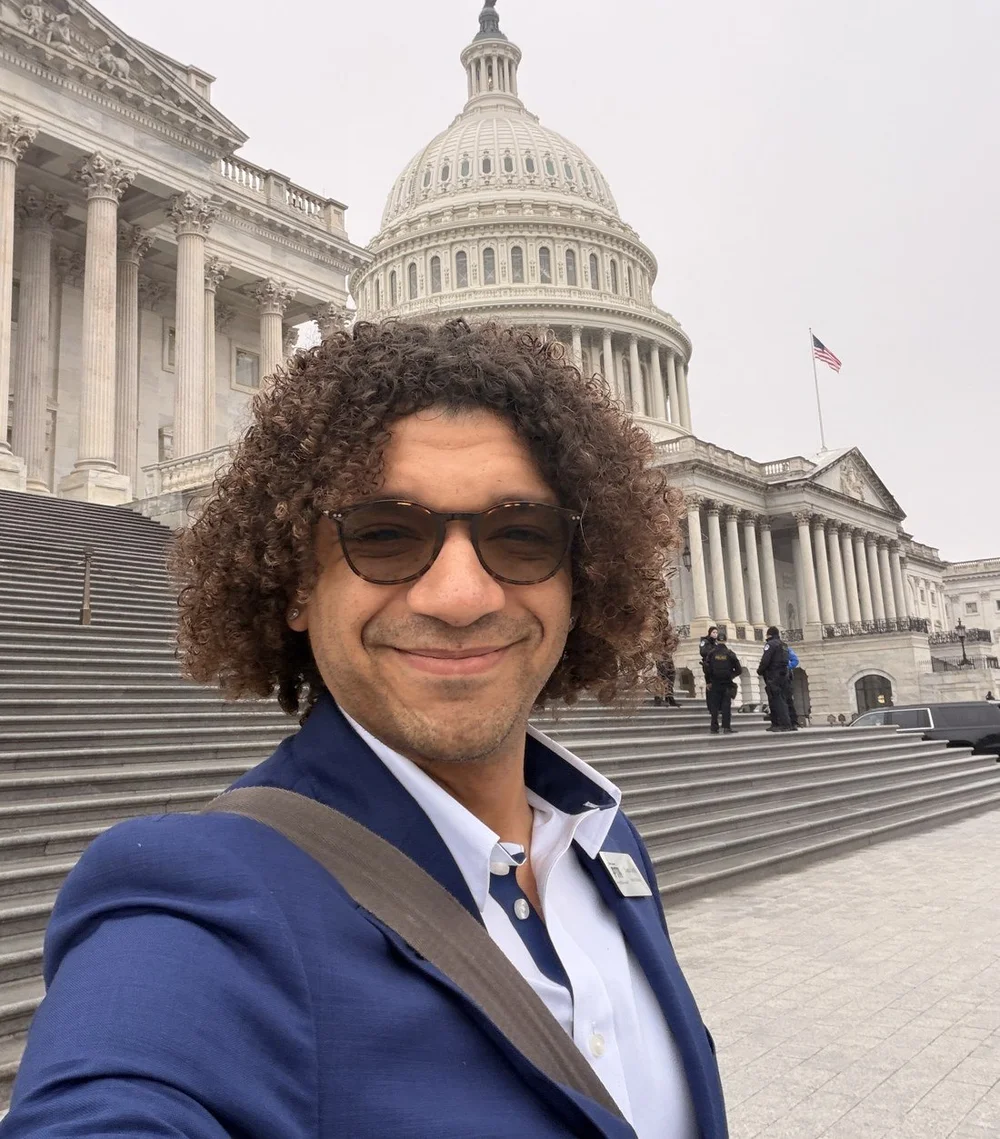
The questions people actually ask me
No spin. If you have one that isn't here, send it and I'll answer it here.
Aren't you wearing too many hats — PTA and the board?
The PTA is a separate nonprofit. It isn't taxpayer-funded and isn't governed by the district or the board. The School Ethics Commission said in a 2000 advisory opinion that a board member can serve as PTA president — it called the roles "compatible, rather than in conflict" — as long as the member steps aside when the PTA is on the agenda, and I do. In practice, PTA parents are some of our most engaged people — they're in the buildings, they know the teachers, and they bring context to the board table that you can't get any other way. Across New Jersey, the volunteers who fill chronically vacant board seats are very often the same ones who show up for the PTA. I'd rather have both hats than an empty chair.
Where does the referendum stand?
All major projects are finished, under budget and ahead of schedule; some flooring is scheduled for school breaks and is already in the numbers. What wasn't spent goes to debt service, which lowers the debt line on your tax bill — that's the only legal use of bond money, and it's what the board has said from day one.
The flyer said $29 a year. Why did my school tax go up more than that?
The $29 was the average yearly cost over the 25-year life of the bonds after state aid — $129.78 on the average home, against $100.09 under the old bond that was ending. That analysis was presented before the vote, and it's still the number. This year's bill is higher because the state pays its share a year behind: the 2026-27 budget had to carry the whole payment, and the $327,468 the state has now sent stays in the debt-service fund and comes off next year's levy. That brings the debt line back to about what was promised, and unspent bond money lowers it further.
Districts around us are closing schools and cutting programs. Are we next?
No. Southampton has not closed a school, cut a program or reduced staffing, and we have stayed at or under the 2% levy cap for eight budgets in a row, even with the referendum work under way and double-digit health-premium increases two years running, with another 34% approved for 2027. Our referendum was also a fraction of what several nearby districts have asked their voters for. We are fiscally sound and prepared — that isn't luck, it's the point of the last three years.
What's going on with the solar panels?
The referendum included money to remove the array early, because the returns looked bad against what it was supposed to be offsetting. That line drew real pushback — it was one of the loudest objections from people who opposed the referendum. Even after the referendum passed, the board took that feedback seriously, discussed it at length, and decided to stop the early removal and let the contract run to its end in 2028. At that point the cost of removing the panels and restoring the land to its original condition falls on the lessor, not on us. In the meantime we had a neutral third-party firm evaluate the system, because there were conflicting claims about it: the panels have been saving about 89% less than projected, the inverters are obsolete, and the "one-dollar buyout" the district was told about years ago doesn't exist — buying the system would cost real money. When 2028 comes, if the numbers show genuine savings and no buyout cost, keeping the panels stays on the table; otherwise that ground becomes expanded outdoor and recreational space, including a baseball field to replace the worn-out one we took out when the turf field went in. Either way, we'll decide it the way we decided this — with the data, and with the community in the room.
Where do you stand on the parental notification policy?
I get this question a lot, and I'll answer it the way I'd answer it in person. My first job is keeping every student safe, and a student who tells a trusted adult something private about themselves deserves to be handled with care, not paperwork. That said, the picture is changing: courts around the country have been ruling in favor of parental notification, and I expect New Jersey's guidance to be overtaken by those rulings sooner rather than later. What people often miss is that our kids already have real protections that don't depend on this policy at all. A student who feels unsafe can tell a counselor or any staff member; there are structures, including the state's child-protection agency, for the rare case where a child would be in danger at home; and our counselors, psychologists and administrators are already bound by professional and legal obligations to protect students. I'd like the language to give our teachers clearer protection too, because they're mandated reporters and I don't want them exposed. The policy itself is model language — keeping it or repealing it changes none of the district's obligations under state law. But in Southampton this has always been handled the way it should be — one family at a time, quietly, with the counselor helping a child and their parents get to a conversation everyone feels safe in. I'm not going to let our district get pulled into a national fight that doesn't reflect how we actually treat our kids.
Is this a partisan race?
Not for me. School board seats are nonpartisan, and I run that way — driven by data and what's actually happening in our buildings, not by any party.
Why have you been quiet online since you were elected?
Sitting board members are held to strict School Ethics rules about discussing district matters on social media. I've followed them. Being careful online isn't the same as being absent — come to a meeting, or watch the live stream. I'll also say plainly that I agree with the growing view that board members should be allowed to speak more openly online, so we can hear from taxpayers and families in real time instead of once a month at a microphone. There's a lawsuit pending in New Jersey and bills in the Legislature that would make clear school board members don't give up their First Amendment rights when they take the oath. I'm hopeful that, going forward, I'll be able to talk with you the way I did before I was elected.
Three seats. Three people who put kids first.
We aren't a joint campaign — no shared costs, no committee. I'm backing them because I've watched them work for kids, and I'd do it whether they backed me or not. Two of nine board members have a child in these schools today; the three of us would make it four.
Mike Dehoff
A dad who attends more board meetings than any candidate I can remember — asks questions, proposes solutions, and brings real financial acumen.
Leon Carelli
Board President. Three years of results, and a lot left to do.
Faith Lynch
I've worked beside her in the PTA and at STRA and watched her care for and fight for kids. She'll do the same on the board.
Vote lines 1, 3 and 4 on Tuesday, November 3.Polls open 6 a.m. to 8 p.m. · Don't just vote the top three — look at the line numbers.